


Garage Door Spring Replacement: Why Springs Break and What Happens Next.
Your garage door’s springs do almost all of the lifting. The opener only guides the door; the springs counterbalance its weight, often 150 to 300 pounds, so the door moves smoothly and stays where you leave it. When a spring fails, everything else in the system starts working harder, and small problems quickly become big ones.
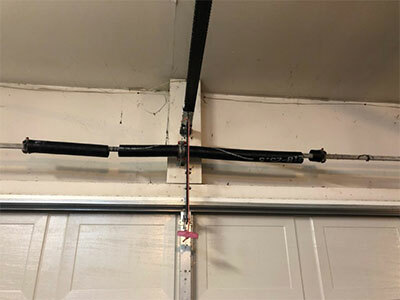
Here’s what causes garage door springs to break, what happens if a worn or broken spring isn’t replaced, and how to spot trouble early in Independence and the Kansas City metro.
Why Garage Door Springs Break
1. Every open and close wears the steel
Cause: Springs are rated for a set number of cycles, one open plus one close, and standard springs are commonly rated around 10,000.
Effect: A family that uses the garage as its main entrance can open and close the door four or more times a day, so the metal fatigues year after year until it finally snaps. For many homes that happens somewhere around the 7–10 year mark.
2. Missouri’s freeze-thaw winters
Cause: Cold makes spring steel more brittle, and Kansas City’s swings between mild afternoons and freezing nights add constant stress.
Effect: Springs that were already worn often give out on the first hard-freeze mornings of the season. That’s why broken-spring calls spike when the temperature drops.
3. Rust and lack of lubrication
Cause: Humidity, road salt tracked in on cars and dry coils all create friction and corrosion.
Effect: Rust pits the steel and creates weak spots, and friction between dry coils speeds up wear. The spring breaks sooner than its rating.
4. An unbalanced door or a mismatched spring
Cause: A spring that’s the wrong size for the door, or a pair where only one was ever replaced, leaves the load uneven.
Effect: One spring ends up carrying more than its share and wears out early, and the door can lift crooked and bind in the tracks.
What Happens If You Keep Using a Door with a Bad Spring
| What’s happening | What it leads to |
|---|---|
| The opener tries to lift the door’s full weight | Stripped gears, a burned-out motor or a failed logic board |
| Cables lose tension or get yanked unevenly | Frayed or snapped cables, and cables jumping off their drums |
| The door lifts crooked | Rollers popping out of the track and bent track sections |
| The door drops faster than it should | A serious crushing hazard for people, pets and cars |
In other words, one worn part can turn into several damaged parts. Replacing a spring when it first shows trouble usually prevents the chain reaction.
Warning Signs Your Spring Needs Replacement
- A loud bang from the garage, often the moment a torsion spring snaps
- A visible gap in the coil of the spring above the door
- The door feels extremely heavy when you lift it by hand
- The opener runs but the door only rises a few inches, or not at all
- The door goes up crooked or slams down quickly
- Squeaking or grinding from the spring area
Not sure what you’re seeing? See How to Tell If Your Garage Door Spring Is Broken.
Why You Shouldn’t Replace Springs Yourself
A torsion spring stores enough energy to lift the whole door. If it’s released or wound without the right winding bars and training, that energy can cause severe injuries. That’s why spring replacement is a job for a trained technician, even for handy homeowners.
Why We Often Replace Both Springs
If your door has two springs, they’ve gone through exactly the same number of cycles. When one breaks, the other usually isn’t far behind. Replacing both at once keeps the door balanced and saves you a second breakdown a few months later.
Garage Door Spring Replacement in Independence, MO
Arrowhead Door Co. has been family-owned and based in Independence since 1986. Our trucks carry common torsion and extension springs, so most spring replacements are finished on the first visit. We also check the cables, rollers and opener settings before we leave. Learn more on our Independence garage door spring repair page or our Kansas City metro spring repair page.

A broken spring is only one of the jobs we handle. See our main page for garage door repair in Independence, from openers and cables to off-track doors.
Frequently Asked Questions
Why did my garage door spring break?
Most springs break from normal wear, after thousands of open-and-close cycles. Cold weather, rust and an unbalanced door make it happen sooner, and Independence weather often adds to that effect.
Can I use my garage door with a broken spring?
It isn’t safe. Without the spring, the opener and cables carry the door’s full weight, which can damage them, and the door can fall unexpectedly.
How long do garage door springs last?
Standard springs are commonly rated around 10,000 cycles, which works out to roughly 7–10 years for many households. Heavier use shortens that.
Broken Garage Door Spring in Independence?
Stop using the door and let a local technician replace it safely, usually on the first visit.


